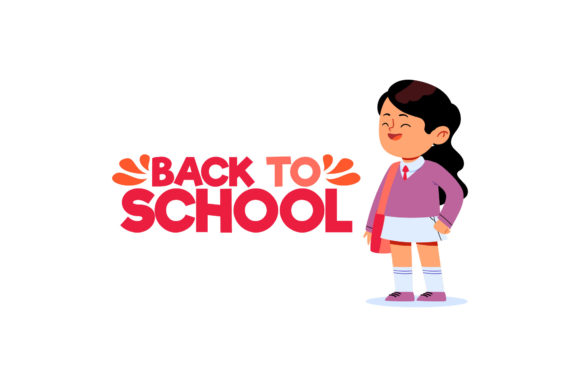
Back to School After Pandemic: Why Vector EPS Graphics Are Essential for Modern Education Design
The return to classrooms after prolonged periods of remote learning has reshaped how educators, administrators, and designers approach educational materials. The phrase Back to School After Pandemic carries not only logistical weight but also a renewed focus on clarity, engagement, and adaptability in visual communication. Schools are producing more digital and print content than ever before, from signage and handouts to lesson plans and promotional materials. In this environment, having access to high-quality, editable graphic resources is no longer a luxury—it is a necessity.
Vector EPS files have emerged as a cornerstone for anyone creating school-related visuals. Whether you are designing a welcome banner for a hybrid classroom or a series of social media posts to reassure parents, the ability to edit every element down to the smallest shape is invaluable. This article explores why vector EPS graphics are particularly well-suited for the challenges and opportunities that define the Back to School After Pandemic era, and how they empower users across different skill levels to produce professional results.
The Unique Demands of Post-Pandemic School Communication
Returning to school after a period of disruption means dealing with mixed emotions, new safety protocols, and a need for clear, consistent messaging. Schools are creating materials that must work across multiple formats: printed flyers, digital newsletters, classroom posters, and website graphics. Each of these applications requires a different size and sometimes a different layout. This is where vector graphics shine.
Unlike raster images, which become pixelated when scaled, vector files maintain crisp edges at any size. A single EPS file can be used for a small sticker on a laptop or a large banner in a school hallway without losing quality. This scalability is especially important for resource-constrained school districts that cannot afford to commission new artwork for every format. When you invest in a vector set designed around Back to School After Pandemic themes, you are essentially future-proofing your content library.
Another layer of complexity is the need for frequent updates. Guidelines around health practices, classroom layouts, and scheduling can change quickly. Having editable vectors means you can adjust colors, swap out icons, or update text without starting from scratch. This agility is a direct response to the volatility that schools have experienced and continue to navigate.
What Makes a Vector EPS File Truly Useful for Educators and Designers
Not all vector files are created equal. The most effective ones share several key characteristics that directly address the workflow needs of those working on Back to School After Pandemic projects.
Fully editable typography and shapes. When a file is built with live text and independent shape layers, you can change the wording to match your specific school or district. You are not stuck with a generic message like "Welcome Back." Instead, you can customize it to say "Welcome Back to Room 204" or "Spring Semester 2025." This level of personalization matters when you are trying to connect with a specific community.
Well-organized layers. A vector file that arrives with poorly labeled or collapsed layers is nearly as frustrating as a static JPEG. High-quality EPS files group related elements logically—for example, separating background elements, characters, text, and decorative accents into distinct layers. This organization lets you hide, recolor, or delete parts of the design without affecting the rest. For a teacher creating a bilingual poster, this means duplicating the text layer in Spanish while keeping the visual elements intact.
RGB color mode and editable swatches. Most school materials are viewed on screens—whether on a learning management system, a classroom projector, or a social media feed. RGB color mode ensures that colors appear vibrant and accurate on digital displays. Combined with editable color swatches, you can quickly shift the entire palette to match your school colors or a seasonal theme. This is especially handy for bulletin boards that need to coordinate with monthly themes.
How Vector Graphics Fit Into Modern Education Workflows
The typical user of these resources is no longer solely a professional graphic designer. Increasingly, teachers, parent volunteers, and administrative staff are tasked with creating visually coherent materials. They may have limited experience with Adobe Illustrator, but they still need results that look polished and coherent.
Vector EPS files that include a preview JPEG and come with clear instructions lower the barrier to entry. A teacher can open the JPEG to see what the final design looks like, then open the EPS in Illustrator to make small adjustments—like changing a headline or swapping a backpack icon for a book icon. Because the files are built with every shape and text element fully editable, even a beginner can achieve professional-looking edits by following simple steps.
Another common scenario is collaboration. A school district might have a central communications office that creates a template, then each school tailors the colors and text. With a well-constructed EPS file, this workflow is seamless. The central office provides the base file, and individual schools use the Graphic Style panel in Illustrator to apply their own brand fonts and colors. This ensures consistency across the district while allowing local flexibility.
The Back to School After Pandemic context also demands sensitivity. Imagery that felt appropriate in 2019—crowded hallways, close-proximity group work, shared supplies—may now feel tone-deaf. Vector graphics that depict socially distanced scenarios, individual workspaces, and outdoor learning environments are in high demand. Having editable files means you can adjust the composition: maybe you want to remove a handshake icon and replace it with a wave or a fist bump. This kind of nuanced editing is only possible when every object is independently accessible.
Practical Benefits Worth Considering Before You Download
Before committing to a vector set, there are several factors to evaluate. The first is compatibility. While EPS is a universal vector format, not all programs handle it equally. Adobe Illustrator offers the most robust editing experience, but applications like Affinity Designer, Inkscape, and even PowerPoint with some conversion steps can work. Always check that the file structure aligns with your software of choice.
Another consideration is the font situation. Many vector sets specify that fonts are not included. This is standard practice because font licensing is separate from graphic licensing. However, a well-constructed EPS file will outline the text or provide a list of the fonts used. If you do not own the exact font, you can substitute a similar one from Google Fonts or your existing library. The key is that the text layers remain editable, so you are not forced to keep the original wording.
High-resolution output is another hallmark of quality vectors. Even though the source file is resolution-independent, the preview and any rasterized elements should be rendered at 300 DPI or higher. This ensures that when you export your final project as a PDF or PNG, it will be print-ready. For school applications—especially those sent home to families or displayed on large boards—you do not want fuzzy edges or pixelated text.
Reusability is perhaps the most underrated advantage. A single vector pack can generate dozens of final assets. Use the same base illustration but change the headline for a welcome back letter, a bus schedule reminder, and a parent-teacher conference flyer. Because the file is organized with separate layers for text and graphics, you can reuse the visual elements across multiple projects. Over time, this dramatically reduces the cost per use and the time spent on design.
Scenarios Where Vector EPS Graphics Make a Measurable Difference
Imagine a middle school art teacher who wants to create a series of posters about classroom routines. Before the pandemic, she might have drawn them by hand. Now, with hybrid schedules and heightened hygiene practices, the instructions need to be clearer and more numerous. She downloads a vector EPS set themed around Back to School After Pandemic that includes illustrations of handwashing stations, mask zones, and individual supply kits. Because the file is fully editable, she can resize each poster to 11x17 inches, change the background color to match her classroom theme, and add her own text in a dyslexia-friendly font. The entire process takes her less than an hour.
Consider a school office manager responsible for the front lobby bulletin board. She needs to update it monthly with new health guidelines, event announcements, and motivational messages. She uses a vector EPS template that includes a seasonal backdrop, editable title text, and reserved spaces for inserted images. Each month, she opens the file, changes the color palette using the Global Swatches, updates the text, and prints a new version. The consistency looks professional, and the board always feels current.
Now think about a district-level communications specialist tasked with creating a unified brand for all schools returning after the pandemic. She selects a vector set that includes versatile icons of students learning outdoors, teachers sanitizing equipment, and families arriving at drop-off. She extracts individual icons to use in PowerPoint presentations, social media graphics, and printed handbooks. Because the vectors are well-organized, she can mix and match elements without redoing the entire layout. The result is a cohesive visual language that reassures parents and students that the district is prepared and thoughtful.
Final Observations on Choosing and Using Vector EPS Resources
The shift back to in-person learning is not simply a return to old habits. It is an opportunity to redesign how schools communicate. Visual clarity matters more than ever, and the tools we use to create that clarity should be flexible, durable, and easy to customize. Vector EPS graphics that are fully editable, organized into logical layers, and built in RGB color mode meet these criteria exceptionally well.
When evaluating a set, look for files that provide a preview JPEG so you can see exactly what you are getting. Check that the typography is live and the colors are adjustable. Confirm that the shapes are well-named and logically structured. These details separate a professional-grade resource from a generic collection of shapes that require hours of cleanup before they become usable.
The Back to School After Pandemic landscape is still evolving. New challenges will emerge, and the need for responsive, adaptable design will only grow. Whether you are a teacher, a parent volunteer, or a full-time designer, having a library of high-quality vector EPS files at your disposal means you can respond quickly, communicate clearly, and maintain a standard of visual excellence that supports the entire school community. Investing in the right resources now will pay dividends for many semesters to come.