5th Grade Back to School SVG File: How to Use Customizable Designs for Your Projects
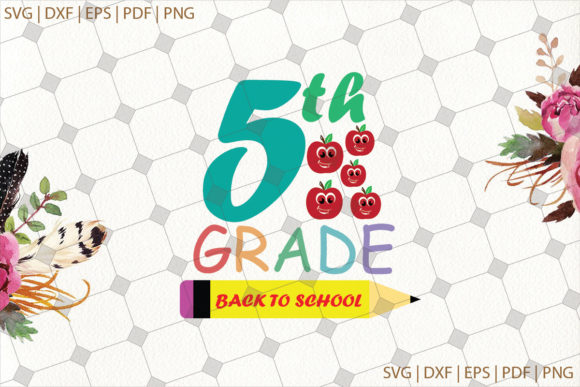
When the back-to-school season approaches, parents, teachers, and small business owners alike look for efficient ways to create personalized items that stand out. A 5th Grade Back to School SVG file offers a versatile foundation for everything from custom t-shirts and water bottles to classroom decorations and school supplies. Available in SVG, DXF, EPS, and PNG formats, with the option for customization and personalization, this digital asset fits seamlessly into a variety of creative and practical workflows. Whether you are a hobbyist using a Cricut at home or a small entrepreneur preparing a batch of orders, understanding how to integrate this file into your production process ensures consistent, high-quality results.
What Makes a 5th Grade Back to School SVG File Valuable for Your Workflow
At its core, an SVG (Scalable Vector Graphics) file is resolution-independent, meaning it can be scaled to any size without losing clarity. This is especially important for school-related projects where you might be printing on large banners or cutting small vinyl decals. The file you receive typically includes the graphic as a single design, but the customized and personalized available option allows you to modify names, dates, or other details before production. This flexibility makes the SVG a multi-purpose asset, not a one-time graphic. You can use it as the central element in a larger design system—pair it with other grade-level graphics, school mascots, or motivational phrases—to build a cohesive back-to-school collection.
File Formats and Compatibility Across Tools
A complete set of formats—SVG, DXF, EPS, and PNG—ensures that you can work in almost any design environment. The SVG file works directly with Cricut Design Space, Silhouette Studio (Designer Edition), Adobe Suite, Inkscape, and Corel Draw. The DXF version is useful for Silhouette users who rely on the free basic software, while the EPS file integrates smoothly with vector programs like Adobe Illustrator. The PNG file, with its transparent background and 300 dpi resolution, is ideal for digital mockups or when you need a quick raster image for previews. Knowing which format to use at each stage of your workflow eliminates compatibility issues and saves time. For example, if you are cutting on a Cricut, import the SVG directly into Design Space. If you are working in Silhouette Studio with the free edition, use the DXF. This preparation step prevents frustration and allows you to focus on the creative process.
Integrating the SVG Into Your Back-to-School Project Workflow
Every project moves through a series of stages: concept, design preparation, material selection, cutting or printing, assembly, and final quality check. The 5th Grade Back to School SVG file serves as the design anchor in the preparation stage, but its impact extends both before and after that point.
Before Cutting: Planning and Customization
Before you open any software, think about the final use case. Are you making a shirt for a specific child? Or multiple shirts for a classroom set? If you order the customized version, you will receive a file with the personalized details already embedded. However, if you purchase the standard file, you can still add text or layers inside your design software. For example, in Cricut Design Space, you can insert a text layer with the student’s name, adjust font and size, and then weld or attach it to the SVG design. This pre-work optimizes the file for the specific project. It also allows you to create variations from one base design: change the name, swap the color, or add a border. For small business owners, this means you can fulfill multiple orders without needing to re-draw the main graphic each time.
During Production: Cutting, Weeding, and Transfer
Once the design is set, the SVG file’s clean lines and well-structured paths make cutting accurate. For materials like iron-on vinyl (HTV) or adhesive vinyl, the file should have enough detail to be weeded easily—remove the excess material without tearing fine parts. A quality SVG for 5th grade back-to-school themes often uses bold, simple shapes that are beginner-friendly but still visually appealing. When you load the file into your cutting machine, pay attention to the size. Because SVG is scalable, you can resize it to fit a small pencil case or a large poster without degradation. However, always check the cut preview to ensure no paths overlap in unintended ways. After cutting, weeding, and applying transfer tape, the final transfer to the substrate (shirt, bag, binder) should align with your planned placement. Using a PNG mockup beforehand can help you visualize the scale.
After Production: Consistency and Reusability
One of the most overlooked aspects of using SVG files is their reusability. After you finish a project, you can store the file in a well-organized digital library—by grade, season, or theme—and retrieve it next year. If you created a custom version with a specific name, keep a separate copy of the base, non-personalized SVG for future uses. This approach builds a long-term asset collection. For educators, you can reuse the same 5th grade design across different classes by swapping out the year or adding new elements. For small business owners, reusability means higher margin per project because the design cost is spread over many units. Additionally, because you own the file, you can revisit and update it when styles change or new vinyl colors become available.
Practical Implementation Tips for Different Users
Different users will interact with the 5th Grade Back to School SVG file in distinct ways. Here are some workflow-oriented tips tailored to common roles.
For Hobbyists and Parents
- Start with the PNG for mockups: Before cutting or printing, drop the PNG into a photo of a shirt using Canva or Photoshop to test placement. This saves wasted material.
- Use the SVG in Cricut Design Space: Import the SVG, then duplicate and resize to fill a mat. For example, you can make multiple small decals for water bottles in one cut session.
- Combine with other free school-themed SVGs: Many creators build sets. Layering a 5th grade design with a “First Day of School” label can create a more complete look.
- Keep a backup in EPS format: EPS is widely compatible across vector software. If you upgrade your machine or software version, the EPS file often remains usable.
For Small Business Owners and Creators
- Batch personalize using the DXF file: If you use Silhouette Studio, the DXF can be opened even without the paid version. You can create a template and then use the “modify” tools to add text nodes for names.
- Create a product listing with the PNG as a display image: The high-resolution transparent PNG works perfectly for Etsy listings or social media previews. Show the design in different colors to demonstrate the personalization option.
- Set up a production workflow file: In your design software, create a master file with the SVG as a locked layer, and an editable text layer above it. This allows you to quickly change the name while keeping the original graphic intact.
- Price for customization: Because the SVG can be modified, you can charge a premium for personalization. The time saved by not redrawing the base graphic justifies a higher value for your product.
For Educators and School Staff
- Use the SVG to create classroom labels: Print the PNG on sticker paper for name tags, or cut the SVG from vinyl for durable desk labels.
- Design a welcome banner: Scale up the SVG in a print-then-cut workflow. Use the EPS version in Adobe Illustrator to set up a large-format print file.
- Involve students in simple projects: Have students color a printed PNG version, then cut and glue to make personalized locker signs. This turns the digital file into an interactive craft.
- Store the file in a shared drive: Keep the SVG and DXF versions accessible for other grade-level teachers who may want to modify the design for their classroom.
Organization and Quality Control for Long-Term Use
To get the most out of a 5th Grade Back to School SVG file, implement a simple digital organizing system. Create folder categories like “Grade-Level SVGs” and subfolders by year. When you download the files, rename them consistently—for example: “5thGrade_BackToSchool_Base.svg” and “5thGrade_Personalized_Emma.svg.” This makes it easy to find the correct version later. For quality control, always open the SVG in a software preview before cutting. Check that all paths are closed and that there are no extra stray nodes. If you plan to sell products made from the file, test a print or cut on scrap material first. Over time, you will learn which materials and heat settings work best with the design, allowing you to produce consistent results across orders.
Also consider the file’s longevity. SVG is an open standard, and it is likely to be supported for many years. Unlike some proprietary formats, an SVG file can be opened in the future even if you switch devices or software. The EPS file offers similar longevity. By keeping multiple format copies, you future-proof your back-to-school projects. If a new cutting machine enters the market, you can likely import the SVG without hassle. For parents, this means you can reuse the same design for a younger sibling next year—just change the name and update the grade number if needed. For small business owners, this consistency builds customer trust: your designs can be ordered year after year with reliable quality.
Conclusion: Making the File Work for Your Process
The 5th Grade Back to School SVG file is more than just a graphic—it is a practical building block for a wide range of creative and commercial projects. By understanding the strengths of each format (SVG for cutting, DXF for Silhouette, EPS for vector editing, PNG for previews), you can move smoothly from concept to finished product. The option for customization adds a layer of efficiency and personal appeal, whether you are making one special shirt for a fifth grader or a hundred identical items for a school fundraiser. Integrate the file into your workflow early, organize it for easy retrieval, and test before committing to final materials. This approach saves time, reduces waste, and allows you to focus on the joy of creating something meaningful for the back-to-school season. When you treat the SVG file as a reusable, adaptable asset, you maximize its value now and in the years ahead.